Showing posts with label Dr Who. Show all posts

Friday, 9 August 2019

The Pirate Planet - On location

At the end of the school year I went on a school trip to Wales, apart from getting to see a bit of my country before I migrate, for a couple of years at least.  On the schedule were visits to Big Pit and Dan yr Ogof caves, both locations used for Pirate Planet episode 2.  As soon as the kids were out the way, I grabbed some photos...

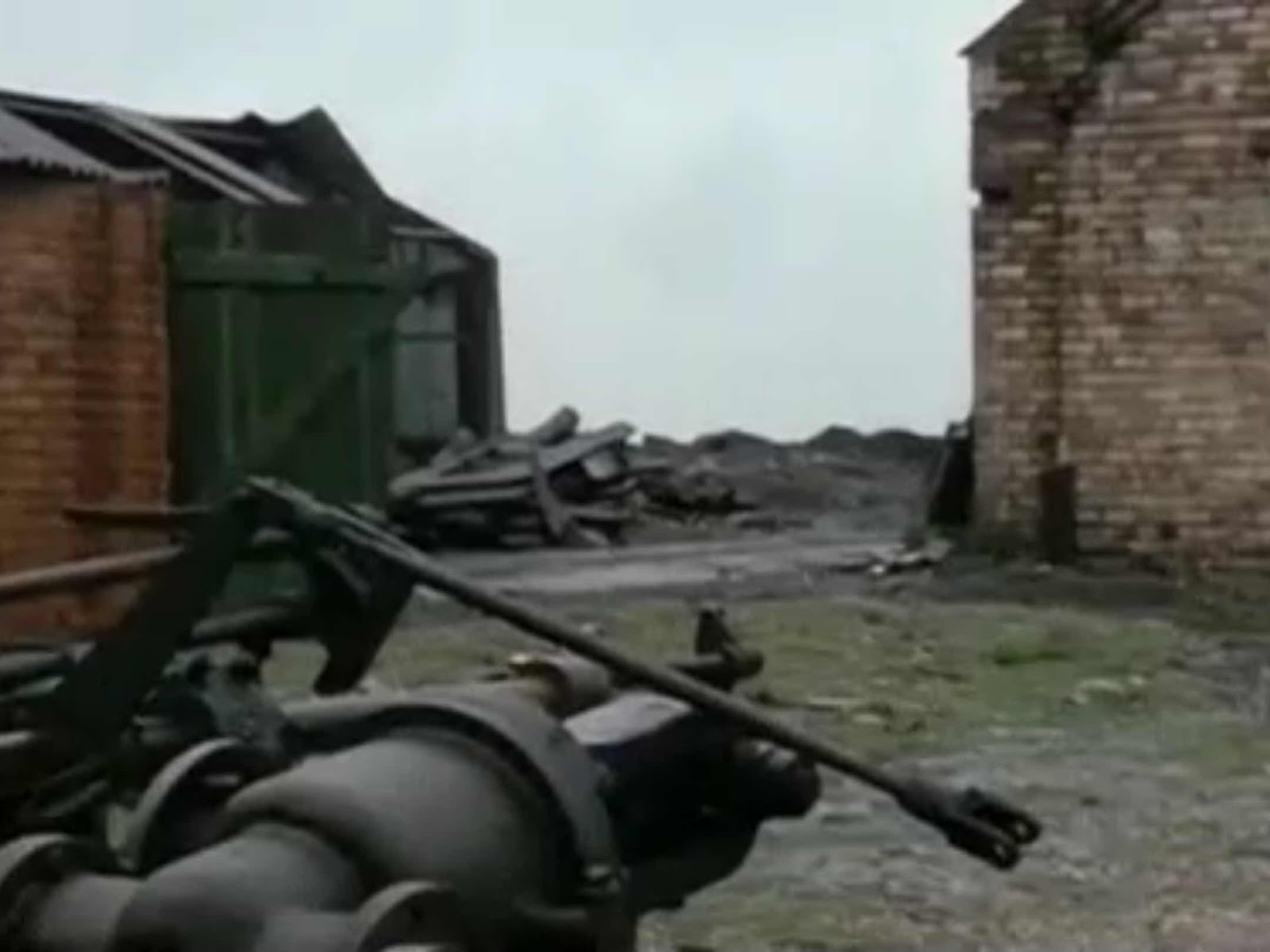
The mine head most prominently appears first making the Pirate mine system look exactly like the Welsh coal mine it is...


We pan right to other buildings still easily identifiable today.


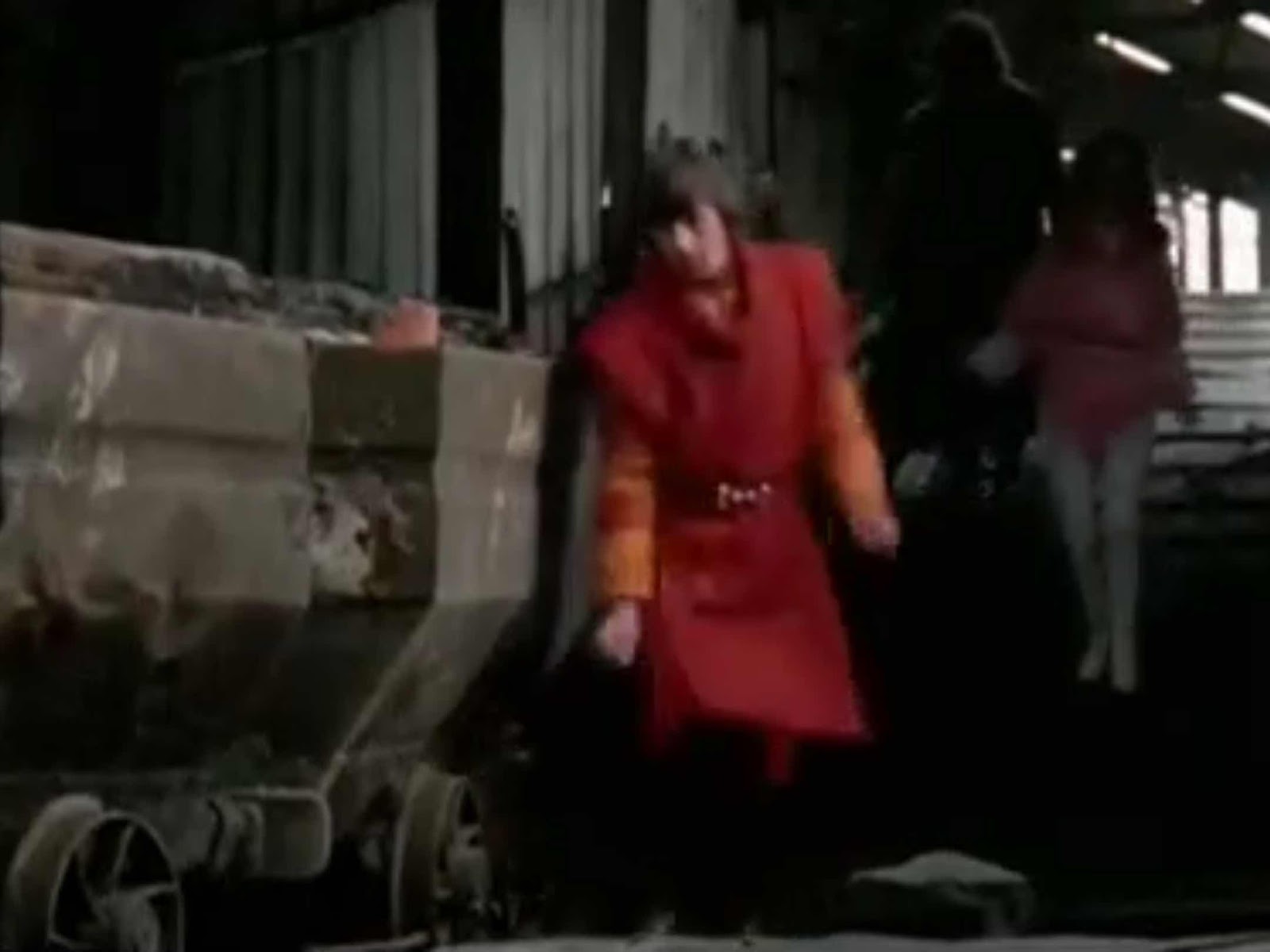
Although the heroes keep running right the next shot has them doubling back into the red brick building on the left and running down the ramp inside into the base of the mine head.


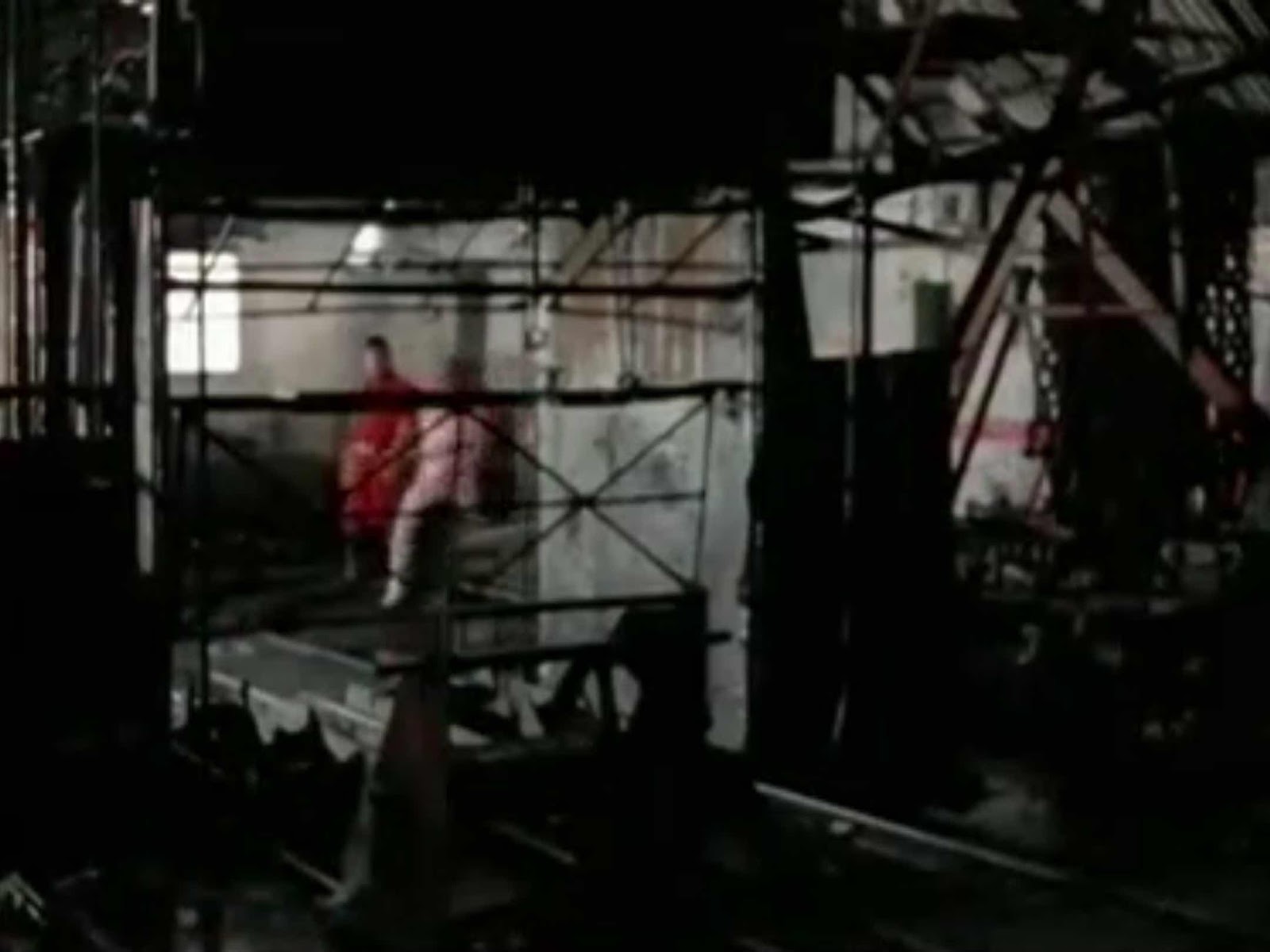
The bottom of the ramp leads into the bay with the cages that descend into the mine. Although clearly the same location, specific details are hard to identify today and the cage appears rather more substantial than in 1978.


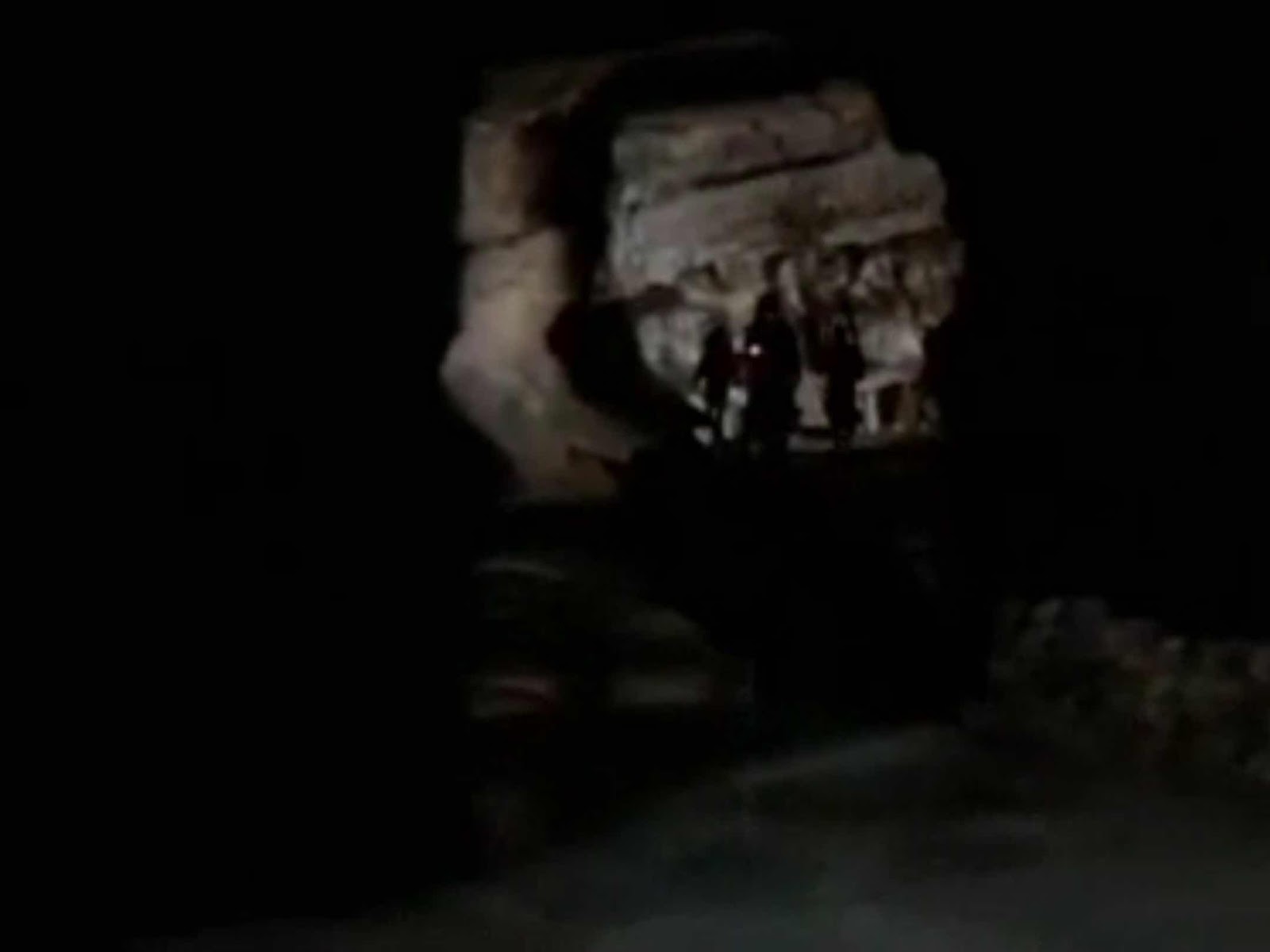
The next location shots sent in the mine has the action move to Dan yr Ogof caves which are rather more ragged and natural in appearance than Big Pit. The caves are extensive but the filming took place in the large Cathedral cave, largely around one bend in the cave system.

The first shot of the Doctor and Romana is on this section of the cave, today brightly lit in yellow light the shape of the tunnel and markings on the wall distinctive.


Shortly after the Captain’s guards arrive and the hero’s run around the corner above with the following shot looking at the same corner but from the other side...


A quick trip to Wales and two well known tourist spots gave a little view of a story less well known for its location work!

Thursday, 8 August 2019

Resurrection of the Daleks - Locations

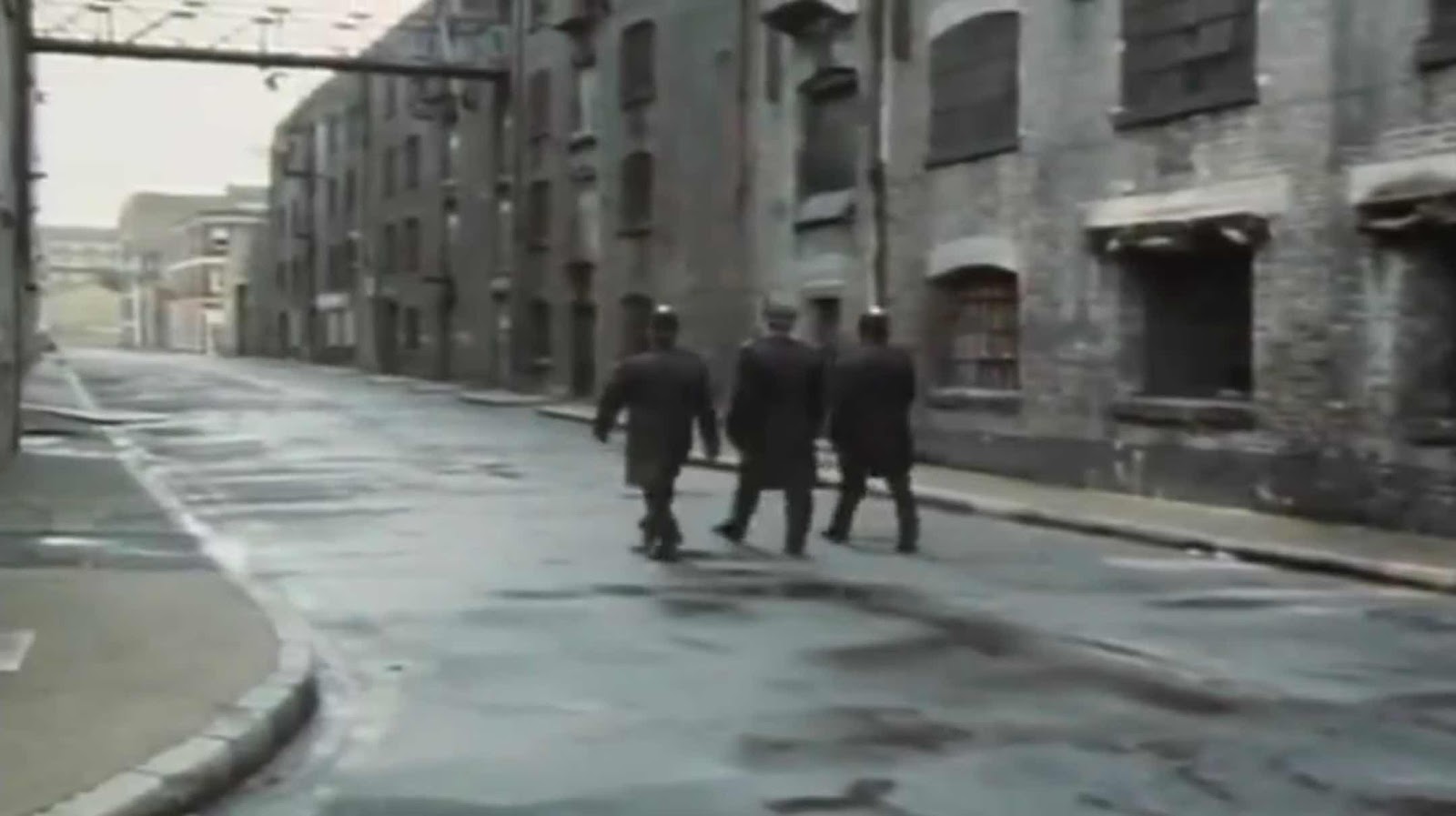
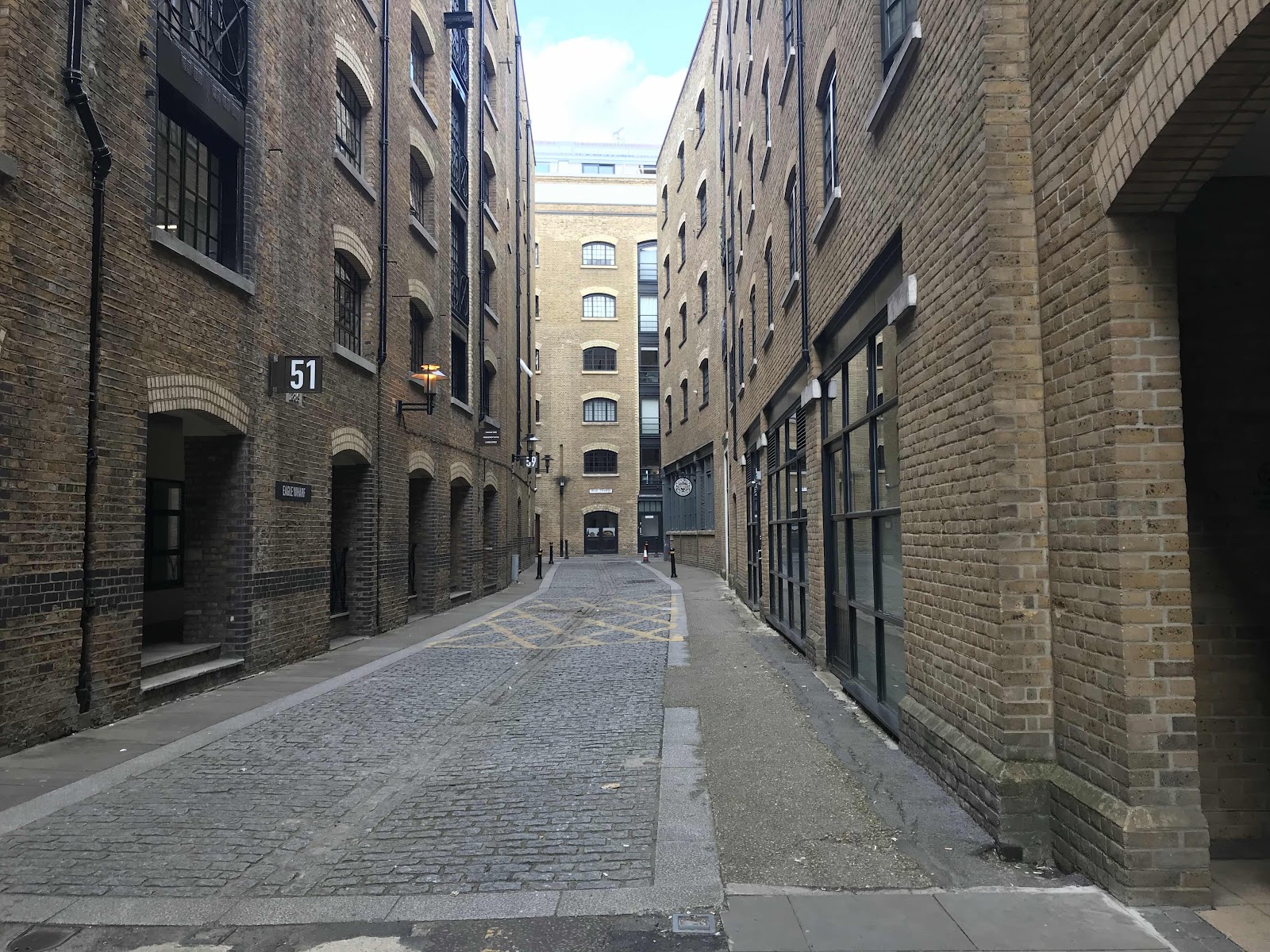
All location work for Resurrection was carried out around Shad Thames, and area of warehouses for shipping from the Thames.  By the 1980s it was disused and derelict, many programmes have filmed here including the Callan film (1984) which I saw just last week.  Resurrection filmed around several streets connected by just a walk of minutes, which have since seen extensive redevelopment in recent decades.

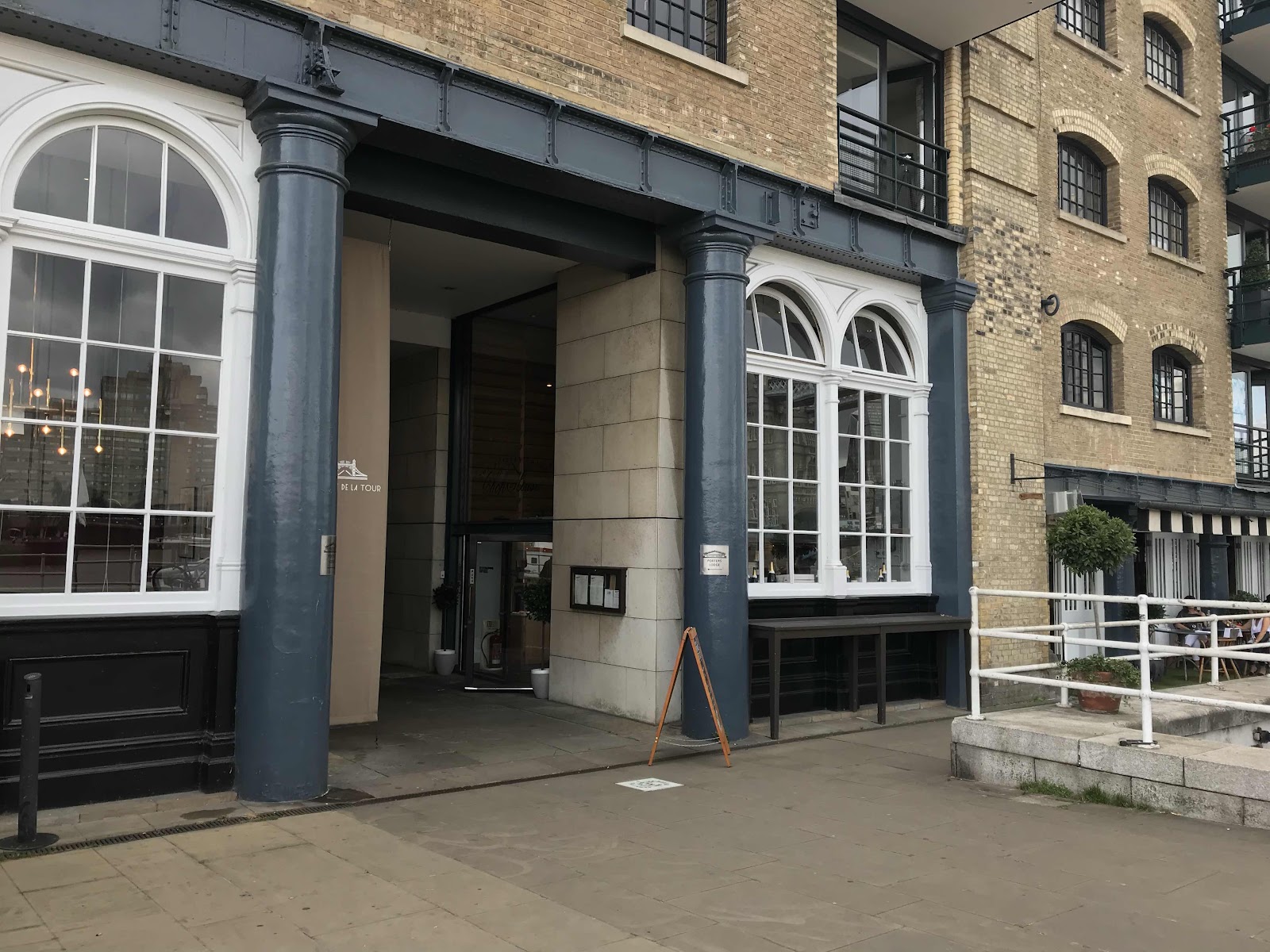
The Tardis arrives on the edge of the wharf nearest Tower Bridge making the location immediately recognisable.


We pan left to see the Tardis arrive.


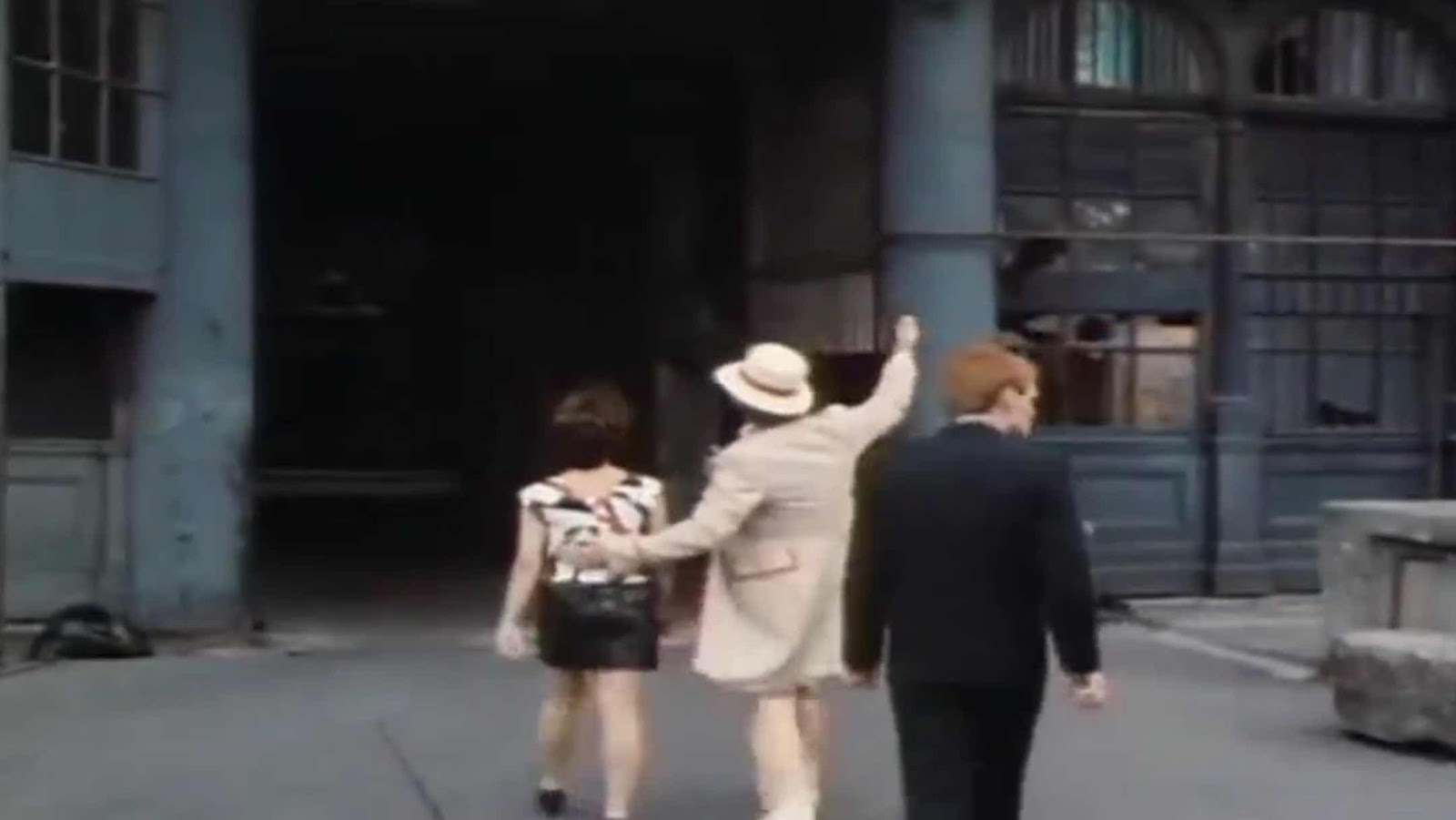
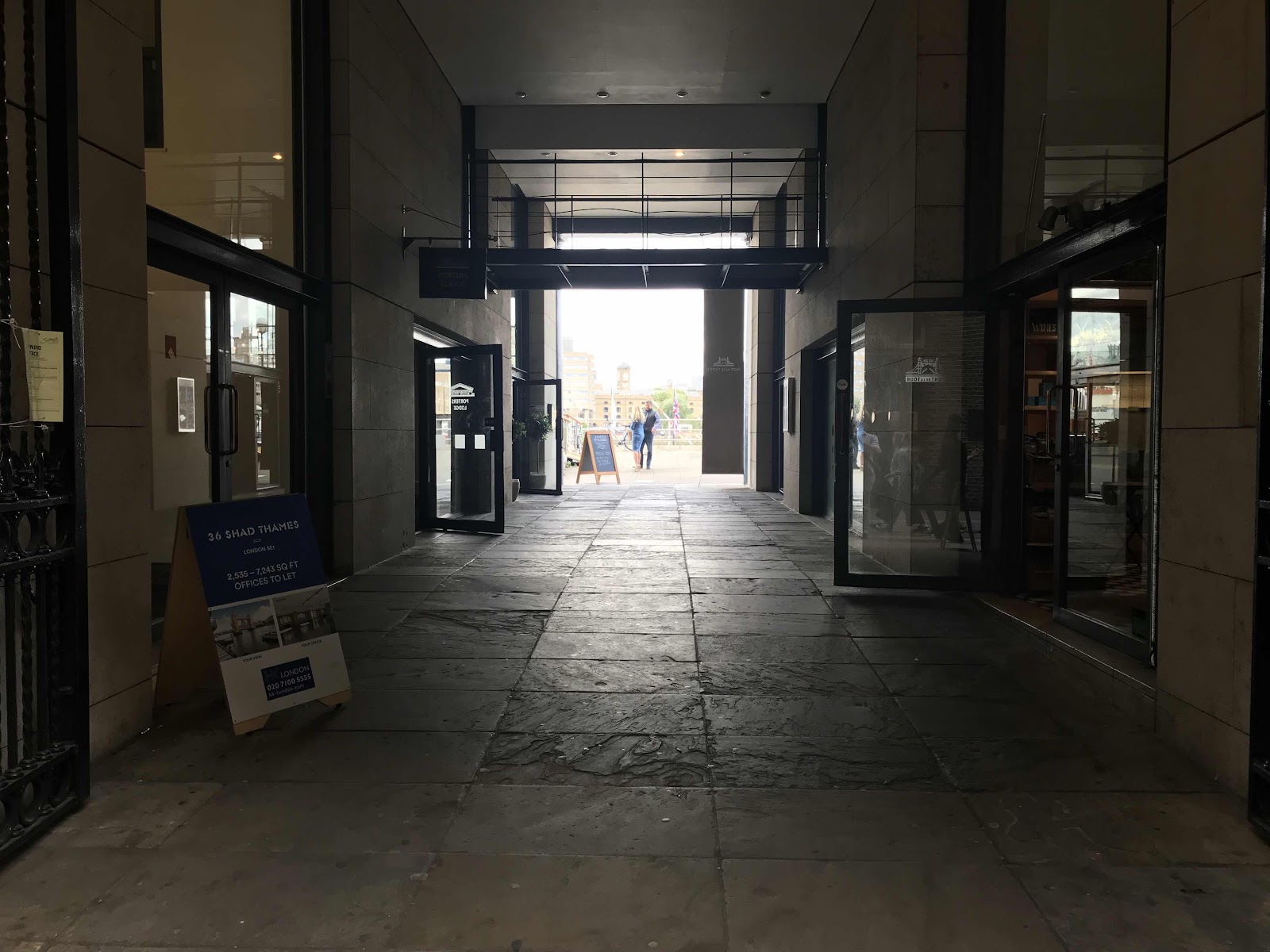
The crew leave the Tardis and walk down the passage on the left.


This passage is seen from the other side a few times during the story as characters are chased down it.


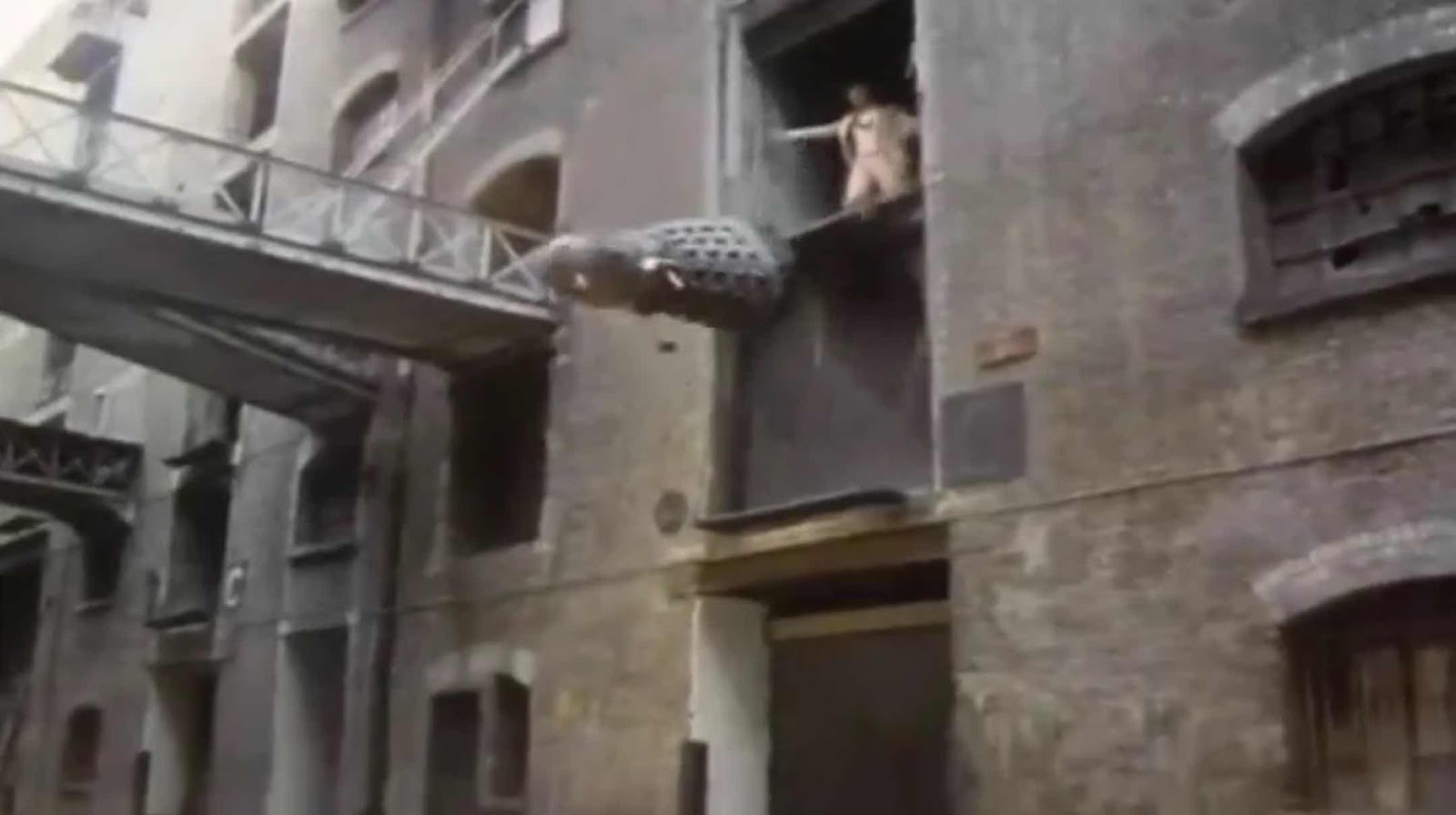
The main street behind is very distinctive with the metal walkways and is viewed from many angles but the walkways themselves are distinctive though working out the exact positioning is a little tricky.


One of the most spectacular shots being the Dalek pushed into the street!


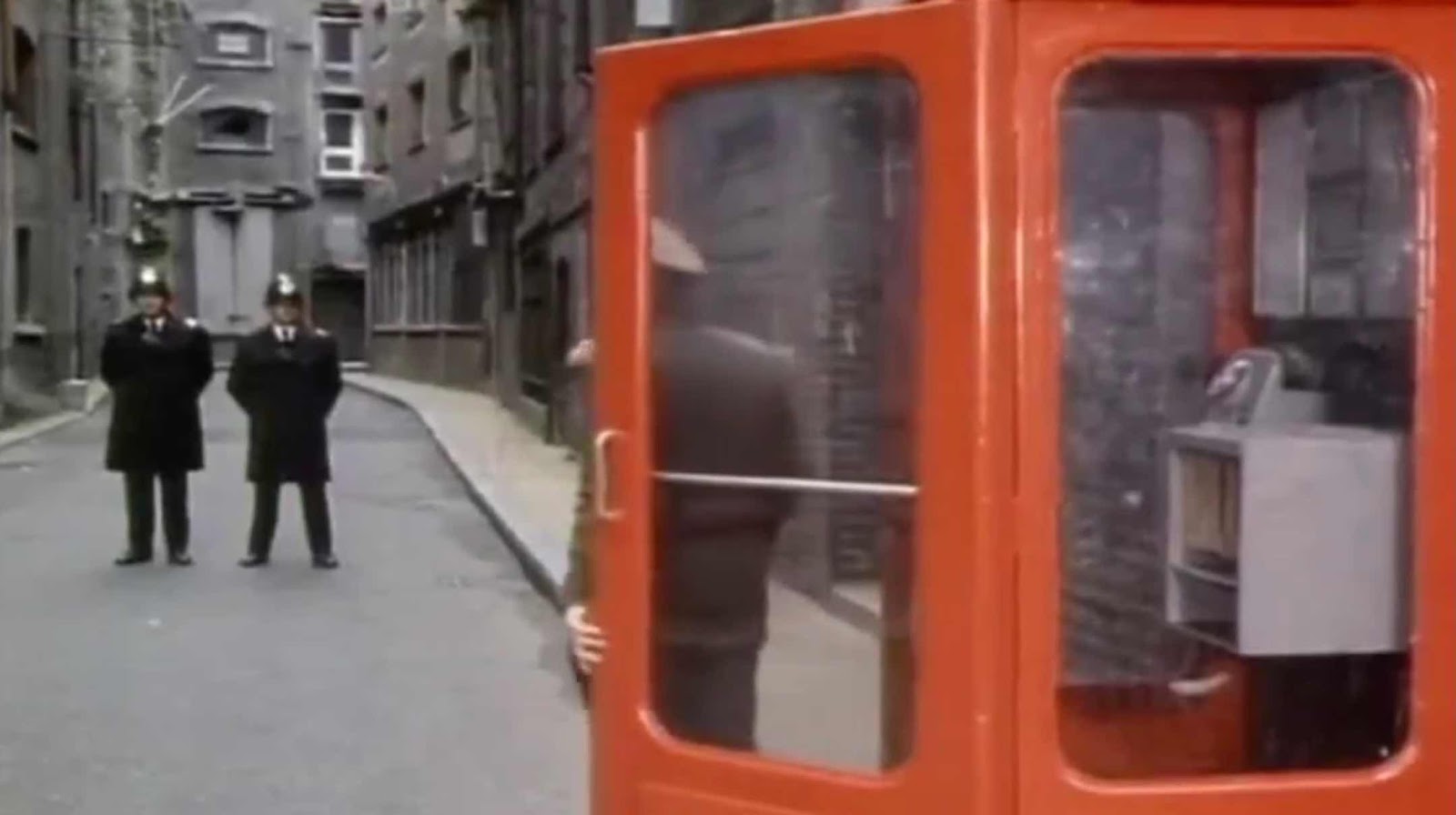
Another street joining this is where the Colonel tries to make a phone all but is killed by Lytton’s policemen.


The end of the main street is seen at the end of the story when Lytton and henchmen calmly walk away, later to appear in Attack of the Cybermen.


As I sign off from life in London, it was a nice walk around to see a notable location one last time!

Wednesday, 1 April 2015

Doctor Who Experience - Revisitied

On a return visit to Wales I decided to go again to the Experience this time to take my girlfriend as she had not seen it.  Also they had apparently made some alterations with Capaldi as the new Doctor to look forward to.

Actually quite a bit has changed and been moved around, and a lot of additions have been made.  The interactive part has changed quite a lot, now with Peter Capaldi doing the interactive parts for the crowd on screen, the story that visitors go through is different and the scenes you have to pass though have changed.  It's not simply the same experience with Capaldi doing new inserts in place of Matt Smith, it is a different story.


Elsewhere lots of the props have had a move around.  The main entrance is now home to a couple of Daleks and lots of things related to the timelords.  These include the new chancellery guard, the old timelord robes, TVM Master robes, Rassilon robes and a female timelord robes that I didn't recognise but am assuming was from Day of the Doctor. 


There's now a full section covering the start of the show using props from 'An Adventure in Space and Time'.  Upstairs lots of new things have appeared and a few old.  The original Web of Fear Yeti that was absent last time has now reappeared looking very moth-eaten!


The Daleks are out in the middle of the room now as well as scattered throughout the museum.  There are also a lot more companion costumes than I recall including a couple of older ones.  Yes, that is Liz Sladen's dreadful pink outfit from the Five Doctors...


There were plenty of additions from Capaldi's last series as well as small sprops and behind-the-scenes type of displays.  We were inside 1 hour and 45 minutes so there is plenty to see as long as you don't rush.  Costumes of most monsters, every Doctor, many companions, a huge amount of stuff and well lit in most cases.  I attended a film costume display at the V&A a couple of years ago and it was expensive, clearly over-sold leading to over crowding to the point where you could barely move inside, displays were poorly lit and with a total ban on photography.  None of even these things apply to the Doctor Who Experience which comes highly recommended and worthy of a repeat visit if you have not been since the renovation for the latest series with Peter Capaldi.

Sunday, 9 November 2014

Worst Doctor Who Book Covers

You shouldn't judge a book by its cover but you can judge a cover by its art.  I fully intend to list my favourite Doctor Who book covers but first I have to get out the way those I dislike the most.  Some are boring while others are misconceived...


Image of the Fendahl


I think a lot of the target books have art of questionable quality, but this one stands out as just being hard on the eyes.  It's just a bit nasty with those very rich colours that clash, that yellow writing on the intense blue.  The rest isn't up to much either, the Doctor posed with a Fendahl behing him, I'm not sure if they are just placed together or whether it's supposed to depict an actual scene in the book.  I find it pretty ugly, yuck.


Set Piece


I know this is a book cover that has received criticism before.  The New Adventures had mixed standards of art too but many were pretty good.  Alister Pearson covers are generally among the best, he did many reprints of Target books for Virgin and most of the Virgin Missing Adventures range and I don't list any of that range among my least favourites because they are at least competent or very good.  The New Adventures range seems a bit more hit and miss.  Towards the end of the range they went for smaller pictures on the covers with a sort of swirly shape above and below.


Back to the cover of Set Piece, it's just awkward.  Ace is depicted in the style of a fantasy novel, sword wielding and minimal clothing.  Her face is rather expressionless, the pose doesn't seem right to my eye and she lacks a belly button too.


Thinking about Kate Orman books, The Left-Handed Hummingbird is rather odd too.  The art is ok but just what is the Doctor doing?


The Janus Conjunction


I've always been of the mind that I prefer painted and drawn art over photoshop jobs on books,  This is why I still appreciate the efforts of the Virgin NAs over many of the BBC books.  It's too easy and formulaic to find a stock photo of the Doctor and a monster, put some filters and effects and call it a day.


There are numerous covers just as the above, particularly early on in the BBC range, that are pretty basic.  The advantage of the photoshop covers is that they are safe and almost always produce a competent result that is not offensively bad, rarely do they look awful, but equally there are very few that are outstanding.  Some of the Virgin books are superb, Blood Heat and The Dark Path come to mind.

But the Janus Conjunction stands out as one of the most boring covers put on any Doctor Who book.  There is almost no feature of credit here.  It's trying to depict the eclipse that the planet in the novel is under, but you wouldn't know that just picking it up. What we have is something that looks like water going into a black void that fills the cover, as though someone forgot to put something in there.


Arc of Infinity


Dear God this cover is awful.  Apparently, or so I've heard elsewhere, Peter Davison wasn't keen on the illustrated covers around this time because of the dubious quality.  But that doesn't excuse the alternative which must have been the cheapest covers produced for any Doctor Who book.  Arc of Infinity stands out as a total failure.  Firstly it appears to have been created by someone cutting up a copy of their Radio Times and sticking the pictures on a repulsive yellow background.  Secondly, it depicts the reveal of the traitor which should be a surprise.  Wouldn't it be better to have Omega be on the cover?


This was a trend around this period.  The Visitation was the first book with a photo-cover but as it was one of the first publicity photos it could be excused, further the original art was apparently quite poor.  After this came a number of photo covers and a run of the dullest covers of Doctor Who books published.  Mawdryn Undead merely has the Doctor standing in his Tardis with a beige background.  Terminus goes for the Arc of Infinity approach by cutting a couple of photos out and pasting them overlapping regardless of perspective.  Earthshock just uses a photo on the bottom half and just gives up on the top half making it plain blue.  It also has the Doctor posing with a gun, which does happen in the story but ends up making this have a very un-Doctor Who-like cover.

Thursday, 30 October 2014

Digging Through Time - Doctor Who's oldest stars.

A few weeks ago The Thief of Baghdad (1940) was on with an appearance by Mary Morris.  I know her better as one of the Number 2s from The Prisoner, but she later appeared in Kinda, marking a huge 45 year gap between her first credited appearance in film (1937) and her eventual appearance in Doctor Who.

Part of a game we play is spotting people who have been in Doctor Who in other things to which we have taken to shouting 'take a shot'.  It's possible to cheat using the IMDB comparison page but it's more entertaining to see how many you can get out of a single programme.  Films like Flash Gordon are particularly lucrative and likely to leave you blind if you take the game too literally.


This huge amount of time between starting a screen career and eventually appearing in Doctor Who seemed enough to remark upon, and led to various questions.  What is the longest gap between someone starting their film career and later appearing in Doctor Who?  Likely to be closely linked, who was the earliest born person to appear in Doctor Who.  And what age was the oldest person to have appeared in Doctor Who?

Mary Morris is a contender on the first point, as it's actually quite difficult to immediately think of someone who was on screen before the '40s who was likely to be doing Doctor Who in the 1980s.  Taking a punt on Richard Todd who also appeared in Kinda has no such luck, only a few uncredited roles (1937) prior to 1949.  And it's these early credited roles that hold more weight as being verifiable in my opinion, so unless I say otherwise, I am basing all my claims on credited roles only.


A good a place to start as any other is with William Hartnell, born 1908 his first uncredited part was 1932 and his first credited role in 1933.  It's worth noting that Hartnell really wasn't that old when he started Dr Who aged 55.  There are many older actors born early 1900s that were to appear in Dr Who.  It's still a solid place to start as some digging was to find that 1933 is about the earliest point that many people in Doctor Who entered the film industry.  Despite Hartnell not being very old, there are not a wealth of people appearing in earlier roles doing Doctor Who.  Furthermore, these people tended to appear in early Doctor Who, so Mary Morris's 45 year record is no where near being under threat.

Around 1930 the silent era was dying and talkies became more popular.  It seems many actors simply didn't make the transition to vocal acting on film or met a language barrier being non-english.  I'm no expert, this would be my guess just looking at IMDB and early cinema, there are distinctly more foreign films in these earlier times and many actors' careers end and new ones begin.  1933 is already 30 years before Doctor Who first aired, and pushing back the years to find people appearing in earlier films who would later appear in Doctor Who is quite a challenge.  People in the middle of a career during the '30s would likely be coming to an end when Doctor Who was starting.


It's tricky just trying to think of people who are old enough, early Doctor Who doesn't actually have that many very old actors in it.  They look old, but aren't very old.  Hartnell was 55, and there are only a few older than him.  Picking obviously old people doesn't often pay off.  Michael Gough seems to have been old forever, but was born after Hartnell in 1916 and didn't appear in film until 1946.  That's not even close to our goal.  Unconvincing Dalek-made double for the Doctor in The Chase played by Edmund Warwick seemed a good stab but he was only a year older than Hartnell but didn't appear in TV/film until 1951.  To find people who were already credited in film by the early '30s requires us to dig very deep, it seems thirty years or more prior to Doctor Who even first airing really is in the distant past.

Along the way were plenty of personalities and actors worth mentioning even if they didn't make it as the oldest or earliest actors in Doctor Who.


George Coulouris was born 1903 and first in film 1933.  He appeared in the Keys of Marinus.  Notable for being in the only crossover Doctor Who has with Citizen Kane.  He worked alongside Orson Welles several times but ended up in the Keys of Marinus - groan!  All this does come back as Coulouris appears as a character in the BF audio Invaders from Mars set in 1938 which offers the in-joke of Orson Welles asking "George, what are you doing with those keys?"

Vivienne Bennett was born in 1905 and played Elizabeth I in The Chase (1965).  Her first credited acting role was in 1929 Le Secret du Cargo.  Trying to find earlier roles is becoming more and more obscure but now we're into the '20s where things get even trickier.


Esmond Knight born 1906 had his first credited role in The Blue Knight in 1928.  Now we're really pushing it back a few years.  He appeared in The Space Pirates in 1968 which a square 40 years between his first film and Doctor Who appearance, but still falls short of Mary Morris's record which now seems unlikely to be beaten.

HMS Hood
More curiosities, Esmond Knight appeared in Sink the Bismark! as the Captain of HMS Prince of Wales.  This is notable as, in reality, Esmond Knight served on HMS Pince of Wales as a Lieutenant when the Bismark was fought during WW2.  He received injuries that left him partially blind for the rest of his life.  The same engagement saw the HMS Hood sunk with all but three survivors.  Coincidentally, Jon Pertwee was among a handful reassigned from the Hood at very short notice only a couple of days prior to the battle.  After the war, the two apparently became friends.

I feel Roy Brent is worthy of mention as, while his entire career is largely uncredited bit-parts, he is the only person in Doctor Who to have appeared in the 1933 King Kong.


I find it quite astonishing that someone who appeared in the original King Kong film, was later in Monster of Peladon and even appeared in Some Mothers Do 'Ave 'Em.  As it happens, no one appearing onscreen in either the 1976 or 2005 remakes of King Kong have been in Doctor Who either new or old.  I'm suspicious that it's not the same person, but various websites do seem to support it.  No one from Metropolis (wouldn't that be great?) or Casablanca has ever been in Doctor Who, though four people from The Third Man have been.  So it's hard to guess what films will give a result.  And for the sake of pure trivia, Tutte Lemkow is the only person in Doctor Who to have appeared as the titular character of an multiple Academy Award winning film.  Who, what?  Why, he was the Fiddler on the Roof!

So after much searching I put forward the following names to answer the questions we started out trying to answer.  I may be mistaken and there could be exceptions in the New Series with which I am less familiar.


Drum roll for... Jack Bligh appeared as Gaptooth in The Smugglers.  He stands out as the earliest born person to have appeared in Doctor Who, being born in 1890 making him already 73 by the time Doctor Who first aired and 76 by the time of his appearance.  He doesn't appear in TV/film credited roles prior to the '60s but had been acting and employed by film companies in various roles.  He travelled quite widely and also fought in France during WW1.

So who was the person to have the longest gap between their first credited role and appearance in Doctor Who?


Sticking strictly to credited roles, Leslie French is the person we found to have the biggest gap between their first appearance in film and role in Doctor Who.  Born in 1904 his first credited role was in 1935 but it wasn't until 1988 at the age of 84, that he appeared in Silver Nemesis as Lady Peinforte's 'Mathematician'.  This also puts a 53 year gap between his first credit and Doctor Who appearance smashing the record of Mary Morris!


And finally, the earliest credited appearance of an actor in film that was later in Doctor Who?  Frederick Schrecker as Julius Silverstein in Web of Fear.  Born 1892, almost a challenger for the oldest person to have been in Doctor Who, his first credited part in 1926 in Der Feldherrnhugel, a silent Austrian film.

We have the earliest born person to appear in Doctor Who, the longest credited career prior to Doctor Who, and the earliest appearance in film of anyone in Doctor Who.  I guess that's it.
Or is it?

When starting this I decided I would only focus on the credited roles to define an actor's career, as that's when an actor starts having speaking roles and appear in the credits.  I had not really considered the possibility of people having very early credited careers that would go on to have have uncredited roles in Doctor Who.  Not that I intended any assumption that Doctor Who was somehow the pinnacle of their career worked towards meaning they obviously had to have a credited role.
Nonetheless, a huge achievement is shown by Vera Lennox.  She isn't the oldest person to have appeared in Doctor Who by some way, being born in 1904, but her first credited appearance is an astonishing 1921 in silent comedy Tilly of Bloomsbury.  She wouldn't appear in Dr Who until State of Decay, a staggering 59 years later.  Her role in State of Decay is an uncredited role as a 'peasant', but it is no less amazing a span of time and it seems churlish to discount it on this basis.  If you were to take Vera Lennox into account, then she is both the earliest person with a credited film role to have been in Doctor Who and the person with the longest span between that role and appearing in Doctor Who.